

Sea Freight in Fine Art Logistics: More Than Just an Alternative
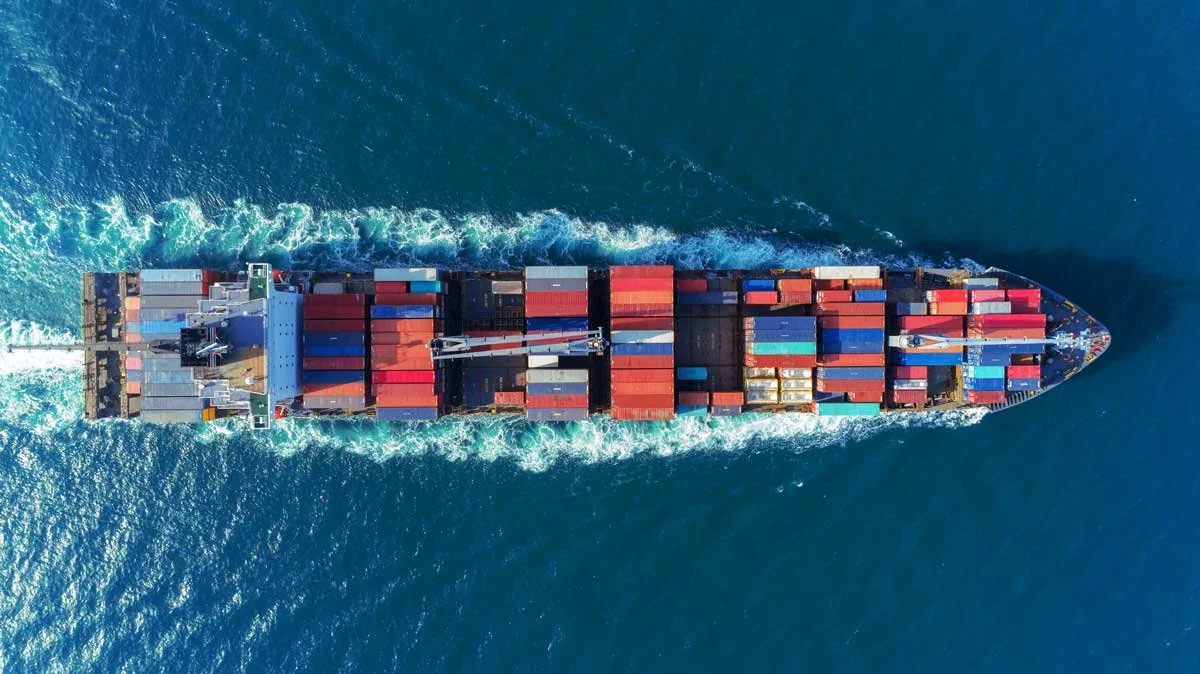
A container ship underway at sea
When discussing international art logistics, air freight is often the first option that comes to mind. Its speed and flexibility make it the preferred choice for projects with tight deadlines or fixed installation schedules.
However, not every shipment is a race against time.
For many international projects—particularly those involving large-scale artworks, museum loans or complete exhibitions—sea freight deserves greater consideration. While it requires a different approach, it can offer significant advantages in terms of sustainability, cost efficiency and transport capacity.
Our team recently coordinated an international sea shipment for a collection of monumental artworks. Beyond the successful delivery itself, the project reinforced an important lesson: sea freight is rarely about the voyage alone—it is about the preparation that takes place long before the container leaves the port.
Sustainability Is Becoming Part of the Conversation
Environmental impact is becoming an increasingly important consideration within the art world. Museums, institutions, galleries and private collectors are progressively integrating sustainability into the way exhibitions and international loans are organised.
Although every project has its own constraints, maritime transport generally produces significantly fewer carbon emissions than air freight. When schedules allow, it offers an opportunity to reduce the environmental impact of an artwork's journey without compromising the standards of care required for valuable collections.
Rather than being simply an alternative to air freight, sea transport is increasingly becoming part of a broader, more responsible approach to exhibition logistics.
An Efficient Solution for Large-Scale Shipments
Sea freight also becomes particularly relevant when transporting oversized or heavy artworks.
As dimensions increase, air freight costs rise rapidly due to volumetric weight calculations and aircraft limitations. Maritime transport offers greater flexibility for large crates, monumental sculptures, installation elements or multi-piece exhibitions, while often providing a more economical solution for long-distance transport.
For many projects, this makes sea freight not only a practical choice, but also a financially balanced one.
The Importance of Planning
If there is one lesson every sea shipment teaches, it is that anticipation is everything.
Unlike air freight, where transport can sometimes be organised within a few days, sea freight follows fixed vessel schedules and requires careful coordination between multiple parties. Packing, crate production, export documentation, customs formalities, container booking, port handling and destination logistics must all align well before departure.
Missing a single milestone may not simply delay a shipment by a day—it can mean waiting for the next available vessel.
For this reason, sea freight is rarely compatible with last-minute requests. Its greatest strengths emerge when logistics are considered early in the planning phase of an exhibition or collection move.
Every Project Requires Its Own Solution
There is no universal answer when choosing between air and sea freight.
The right solution depends on many factors: the nature of the artworks, their dimensions, the destination, the available timeframe, the project's environmental objectives and, of course, the overall budget.
At Arkshore, we believe that selecting the appropriate transport method is just as important as organising the transport itself. Every project begins with a careful assessment of these parameters to ensure that the chosen solution best serves both the artworks and the client's objectives.
Our recent experience confirmed something simple but essential: when time allows, sea freight is not merely an alternative to air transport—it is often one of the most thoughtful and efficient ways to move art internationally.